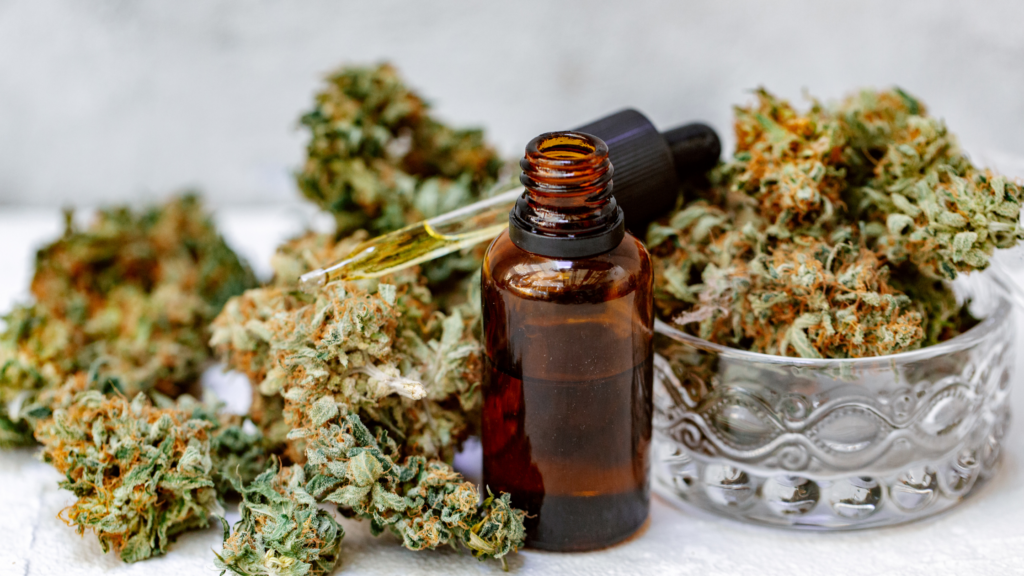
Cannabis is a fascinating and complex plant that has been cultivated and used by humans for thousands of years. It comes in several varieties, most notably Sativa, Indica, and Hybrid strains, each with unique effects and characteristics. Knowing the differences between these strains can help you make informed decisions about your cannabis experience, whether for medical or recreational purposes.
As cannabis gains acceptance and legalization worldwide, understanding strain differences has become increasingly important. Each variety of cannabis has specific traits that can influence everything from your mood to your health. This guide leverages the latest research and expert insights to help you navigate the ever-expanding world of cannabis.
Understanding Cannabis Basics
To appreciate the differences between Sativa, Indica, and Hybrid strains, it’s essential to first understand some cannabis basics.
Cannabis Plant Taxonomy
Cannabis belongs to the Cannabaceae family, which also includes plants like hops (used in beer). The primary species we encounter are Cannabis sativa and Cannabis indica, with hybrids being a mix of these two. Additionally, Cannabis ruderalis, a third species, is less commonly discussed but has some unique attributes, particularly its fast growth cycle. Understanding these species forms the foundation for exploring the distinct characteristics of Sativa, Indica, and Hybrid strains.
Historical Evolution of Strains
Throughout history, cannabis strains evolved naturally in different regions, adapting to local climates and developing unique properties. Over the past century, breeders have selectively cultivated cannabis to enhance desirable traits—such as high THC content or specific terpene profiles—leading to the wide variety of strains we have today.
Basic Cannabinoid Science
Cannabinoids are chemical compounds found in cannabis, with THC (tetrahydrocannabinol) and CBD (cannabidiol) being the most well-known. THC is responsible for the plant’s psychoactive effects, while CBD is non-psychoactive and valued for its therapeutic properties. Together, these cannabinoids influence how cannabis affects the mind and body.
The Entourage Effect Explained
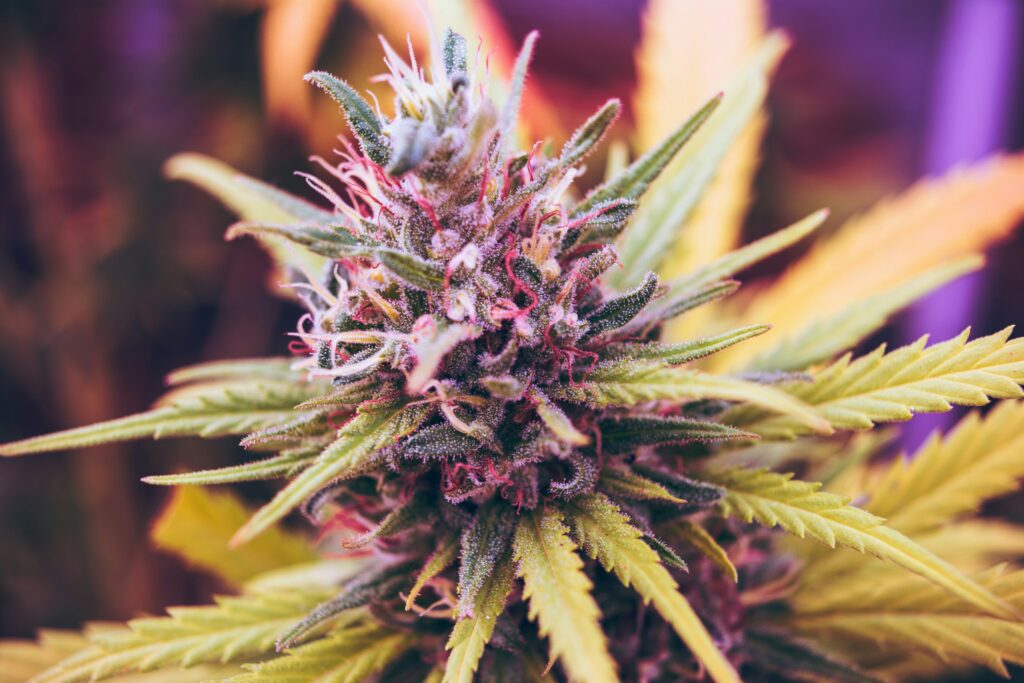
The “entourage effect” refers to the synergistic interaction of cannabis compounds—cannabinoids, terpenes, and flavonoids—that work together to enhance the plant’s effects. This means that consuming whole-plant cannabis might provide more benefits than isolated cannabinoids.
Sativa Strains In-Depth
Botanical Characteristics
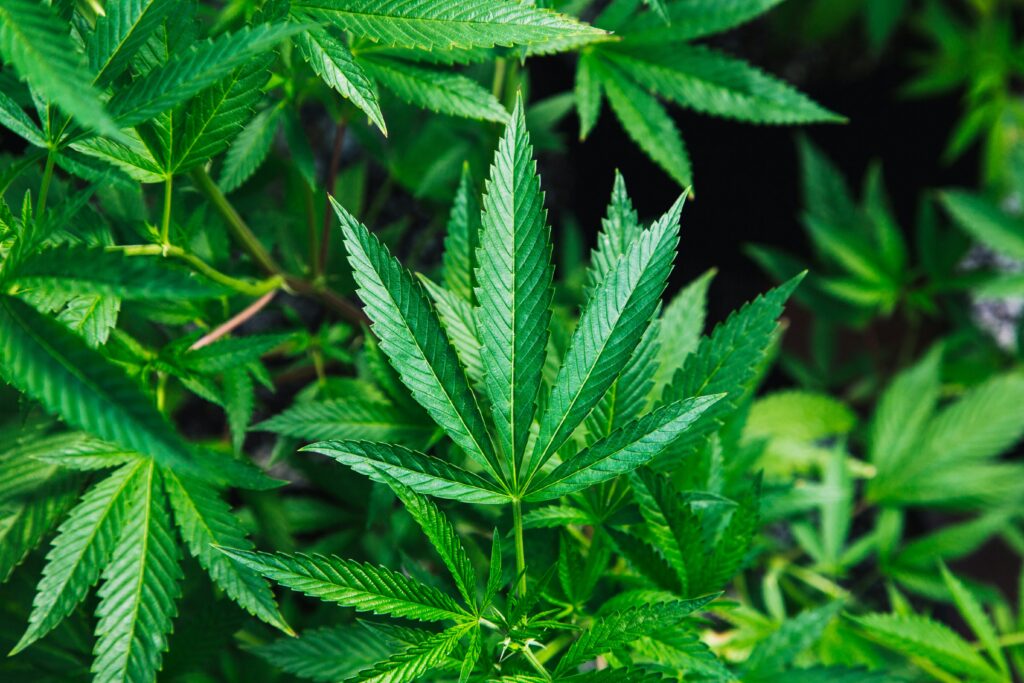
Sativa plants are tall and have narrow leaves. They tend to thrive in warm climates and grow more slowly than Indica varieties. Specifically, Sativas often originate from regions like Southeast Asia, Central America, and Africa, where long growing seasons encourage their characteristic height and loose bud structure. This regional adaptation not only influences their physical traits but also affects their chemical profiles and effects.
Chemical Composition
Sativa strains generally have higher THC-to-CBD ratios, which means they tend to be more psychoactive. Dominant terpenes in Sativa strains often include limonene (citrus) and pinene (pine), which contribute to their uplifting effects.
Effects Profile
Sativa strains are known for their energizing effects. They tend to produce a cerebral high, which can help with focus, creativity, and social interaction. The onset is often quicker, with effects lasting a few hours depending on the individual’s tolerance.
Medical Applications
Sativas are often recommended for conditions like depression, ADHD, and fatigue because of their mood-lifting properties. Some research suggests Sativa strains can help with creative tasks and may support motivation. When it comes to dosing, it’s generally advised to start with a small amount, especially for those new to THC.
Indica Strains in-Depth
Botanical Characteristics
Indica plants are shorter and bushier, with broad, dark-green leaves. They originate from mountainous regions such as Afghanistan, Pakistan, and Tibet, where their shorter flowering cycles and compact structure evolved to thrive in cooler climates. These adaptations make them ideal for indoor cultivation.
Chemical Composition
Indica strains often have a more balanced or higher CBD-to-THC ratio. Their dominant terpenes, such as myrcene (earthy) and linalool (floral), contribute to their relaxing and sedative properties.
Effects Profile
Indica strains are best known for their calming, full-body effects. They often produce a deep sense of relaxation and are associated with what is colloquially referred to as “couch-lock.” These effects make them popular for evening use and promoting restful sleep.
Medical Applications
Indicas are frequently used to manage chronic pain, muscle spasms, anxiety, and insomnia. Their sedative effects make them ideal for nighttime use and for conditions requiring deep relaxation. Proper dosing is essential to avoid excessive drowsiness, especially for those new to cannabis.
Origins and Botany
Sativa
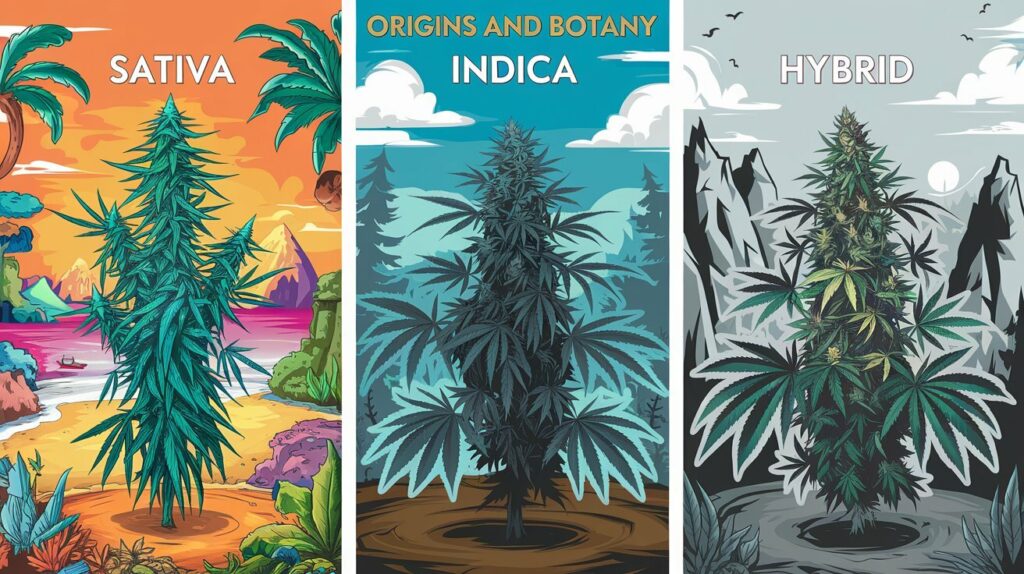
Cannabis sativa plants are native to equatorial regions such as Central and South America, Southeast Asia, and Africa. They are typically tall, reaching up to 12 feet, with long, narrow leaves. Sativa plants thrive in warmer climates and have a longer flowering cycle compared to Indica strains.
Indica
Cannabis indica plants originate from the mountainous regions of the Middle East, including Afghanistan, Pakistan, and Tibet. They are generally shorter and bushier, with broad, dark-green leaves. Indica strains are well-suited for cooler climates due to their shorter flowering period.
Hybrid
Hybrid strains are cultivated by crossbreeding Sativa and Indica plants to combine desired traits from both. This intentional breeding results in a vast array of strains that can exhibit characteristics leaning towards either parent or a balanced mix of both.
Detailed Comparison Chart
To provide a clear overview of the differences between Sativa, Indica, and Hybrid strains, refer to the following comparison:
| Attribute | Sativa | Indica | Hybrid |
| Origin Regions | Equatorial regions (e.g., Central/South America, Southeast Asia, Africa) | Mountainous regions (e.g., Afghanistan, Pakistan, Tibet) | Crossbreeding of Sativa and Indica strains |
| Plant Morphology | Tall (up to 12 feet), long narrow leaves, lighter green color | Shorter, bushier, broad dark-green leaves | Varies depending on dominant genetics |
| Typical THC/CBD Ratios | Higher THC, lower CBD | Higher CBD, lower THC | Balanced THC and CBD levels, depending on breeding |
| Common Terpenes | Limonene (citrusy), Pinene (pine) | Myrcene (earthy), Linalool (floral) | Varies; can include a mix of terpenes from both Sativa and Indica |
| Growth Characteristics | Longer flowering time, prefers warmer climates | Shorter flowering time, thrives in cooler climates | Adaptable growth patterns, depending on genetic dominance |
This table offers a quick reference to understand the distinctions between each strain type.
Chemical Profiles
The effects of cannabis strains are largely determined by their cannabinoid and terpene profiles.
Cannabinoids
- THC (Tetrahydrocannabinol): The primary psychoactive compound responsible for the “high” associated with cannabis.
- CBD (Cannabidiol): A non-psychoactive compound known for its potential therapeutic benefits, such as reducing anxiety and inflammation.
Sativa strains often have higher THC levels, leading to more stimulating effects, while Indica strains may have higher CBD levels, contributing to more relaxing effects. However, this is not a strict rule, as cannabinoid content can vary widely among individual strains.
In-Depth Exploration of Terpenes
Terpenes are aromatic compounds that contribute to the unique scent, flavor, and effects of cannabis strains. Here’s a closer look at some prevalent terpenes:
Myrcene
- Aroma and Flavor: Earthy, musky, with hints of cloves.
- Therapeutic Benefits: May have sedative and muscle-relaxing effects.
- Strain Examples: Often found in Indica strains like Granddaddy Purple.
Limonene
- Aroma and Flavor: Citrusy, reminiscent of lemons.
- Therapeutic Benefits: Associated with elevated mood and stress relief.
- Strain Examples: Common in Sativa strains such as Super Lemon Haze.
Pinene
- Aroma and Flavor: Pine-like scent.
- Therapeutic Benefits: May promote alertness and memory retention.
- Strain Examples: Present in strains like Jack Herer.
Linalool
- Aroma and Flavor: Floral, similar to lavender.
- Therapeutic Benefits: Potential calming and anti-anxiety effects.
- Strain Examples: Found in strains such as LA Confidential.
Understanding these terpenes can help you select strains that align with your desired effects and sensory preferences.
Effects and Uses
Sativa
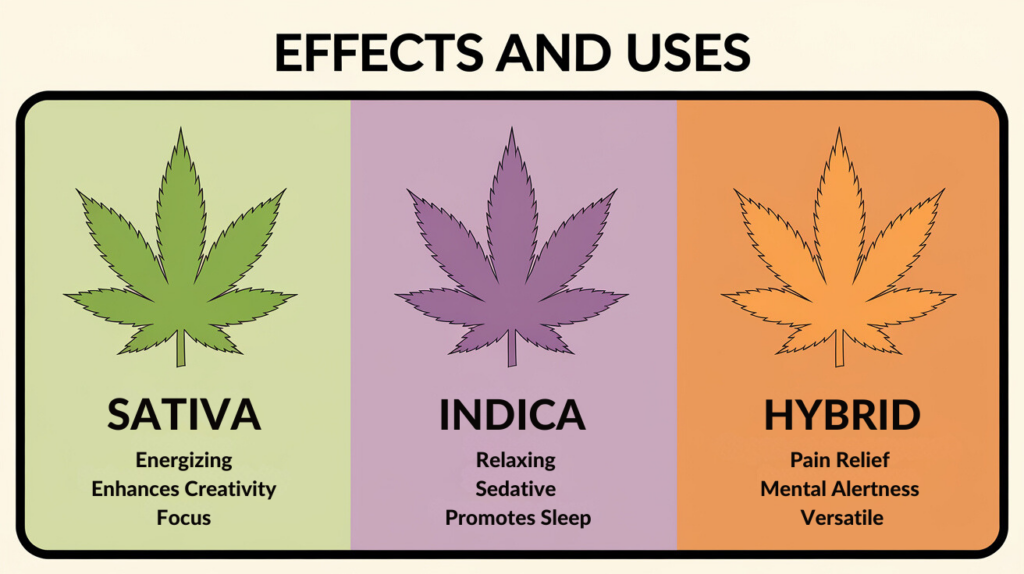
Sativa strains are generally associated with uplifting and energizing effects, making them suitable for daytime use. They may enhance creativity and focus, which can be beneficial for activities requiring mental clarity.
Indica
Indica strains are typically linked to relaxing and sedative effects, often leading to what’s colloquially known as ‘couch-lock.’ They are commonly used in the evening or before bedtime to promote sleep and relaxation. In contrast, Sativa strains offer a different experience, characterized by uplifting and energizing effects.
Hybrid
Hybrid strains offer a balance of effects, depending on their Sativa-to-Indica ratio. They can be tailored to provide specific benefits, such as pain relief with mental alertness, making them versatile for various uses.
Therapeutic Uses
Indicas are primarily used for managing pain, anxiety, and sleep disorders. Studies show that Indicas can be particularly effective for muscle spasms, insomnia, and other conditions requiring deep relaxation. Proper dosing is critical, as higher doses may lead to intense drowsiness, making daytime use less practical.
Hybrid Strains Detailed Examination
Understanding Hybridization
Hybrids are created by cross-breeding Sativa and Indica strains. The goal of hybridization is often to combine the best characteristics of both parents—such as Sativa’s uplifting effects and Indica’s relaxing qualities. Breeders must carefully consider genetics to ensure strain stability, meaning consistent traits across different grows.
Types of Hybrids
- Sativa-Dominant: Hybrids that lean toward Sativa effects are ideal for those looking for a mood boost without intense sedation.
- Indica-Dominant: These hybrids favor relaxation and can help with pain while offering more manageable energy levels.
- Balanced Hybrids: These are cultivated to provide a mix of both Sativa and Indica effects, making them versatile for both day and night use.
Effect Profiles
Hybrids vary significantly in their effects, depending on their genetic makeup. This variability makes hybrids appealing to users who want specific outcomes tailored to their needs. Predictability can be challenging, which is why some users select hybrids based on personal experience and tolerance.
Comparative Analysis
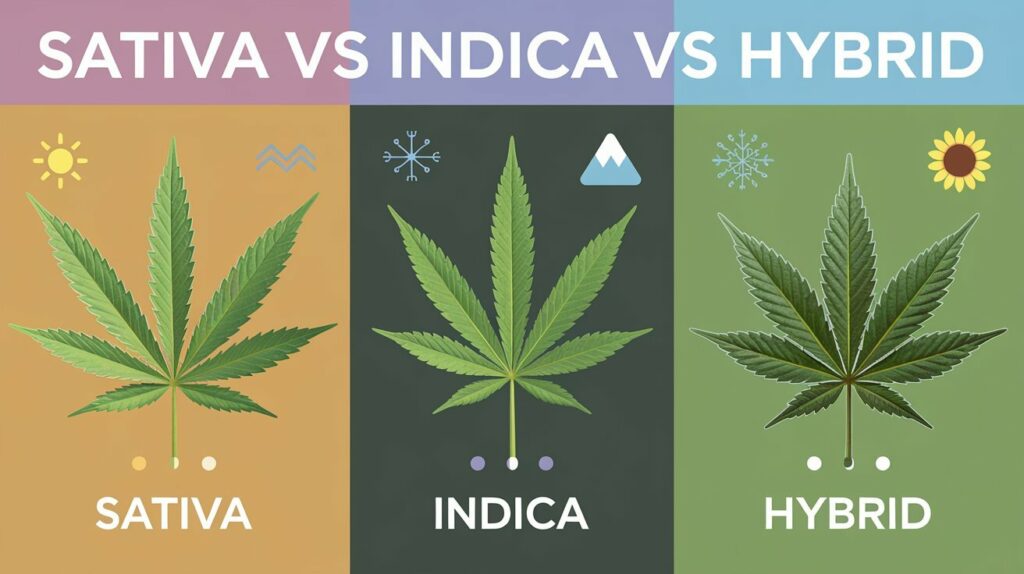
Comparative Analysis of Cannabis Strains: Sativa, Indica, and Hybrid
Understanding the distinctions among Sativa, Indica, and Hybrid cannabis strains is essential for selecting the appropriate type to suit your needs. Here’s a detailed comparison:
| Attribute | Sativa | Indica | Hybrid |
| Origin Regions | Equatorial regions (e.g., Central/South America, Southeast Asia, Africa) | Mountainous regions (e.g., Afghanistan, Pakistan, Tibet) | Crossbreeding of Sativa and Indica strains |
| Plant Morphology | Tall (up to 12 feet), long narrow leaves, lighter green color | Shorter, bushier, broad dark-green leaves | Varies depending on dominant genetics |
| Typical THC/CBD Ratios | Higher THC, lower CBD | Higher CBD, lower THC | Balanced THC and CBD levels, depending on breeding |
| Common Terpenes | Limonene (citrusy), Pinene (pine) | Myrcene (earthy), Linalool (floral) | Varies; can include a mix of terpenes from both Sativa and Indica |
| Growth Characteristics | Longer flowering time, prefers warmer climates | Shorter flowering time, thrives in cooler climates | Adaptable growth patterns, depending on genetic dominance |
This comparison highlights the general differences among Sativa, Indica, and Hybrid strains. However, individual experiences may vary based on specific strain genetics and personal physiology.
Medical Applications
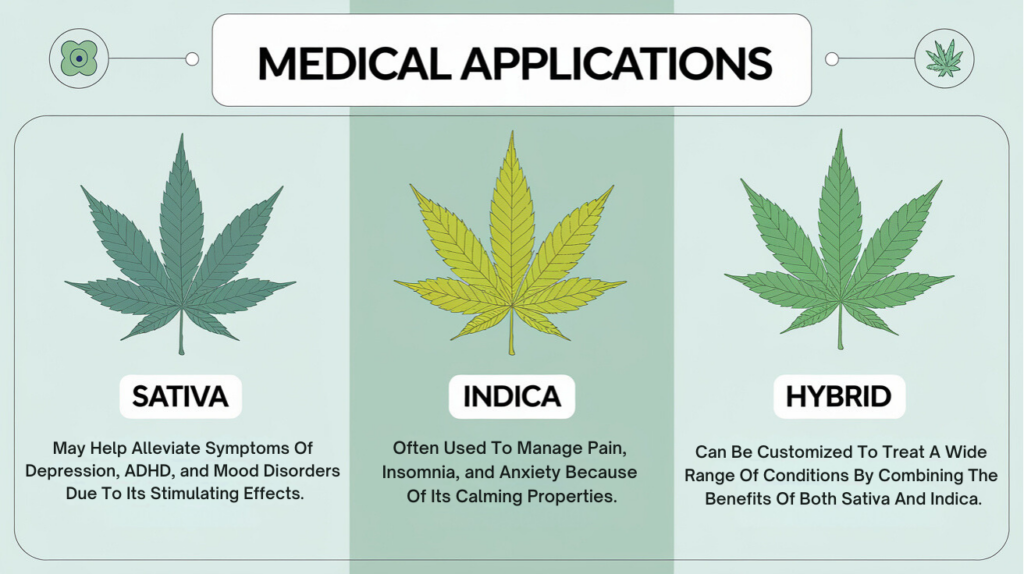
Condition-Specific Recommendations
Here’s a table outlining condition-specific recommendations for cannabis strains:
| Condition | Recommended Strain Type | Rationale |
| Pain Management | Indica | Indica strains are preferred for their sedative and body-relaxing properties, making them effective in alleviating various types of pain. |
| Mental Health | Sativa | Sativa strains can help manage conditions like depression and anxiety by uplifting mood and providing energizing effects. |
| Sleep Disorders | Indica or Hybrid | Indica strains are widely used for their sedative effects to promote sleep, while some hybrid strains may offer relief without causing excessive drowsiness. |
Note: It’s advisable to consult with a healthcare professional to determine the most appropriate strain and dosage for your specific condition.
Research Evidence
Clinical studies show promising results for cannabis in treating a range of conditions, though much more research is needed to fully understand the therapeutic potential. Patient reports are also a valuable resource, providing anecdotal evidence that helps shape usage guidelines.
Usage Guidelines
- Dosing Protocols: Start low and go slow, especially when experimenting with new strains.
- Administration Methods: Smoking, vaporizing, edibles, tinctures—each offers different onset times and durations.
- Safety Considerations: Users should be aware of their tolerance levels, and those new to cannabis should avoid high-THC strains to prevent uncomfortable experiences.
Consumer Guide
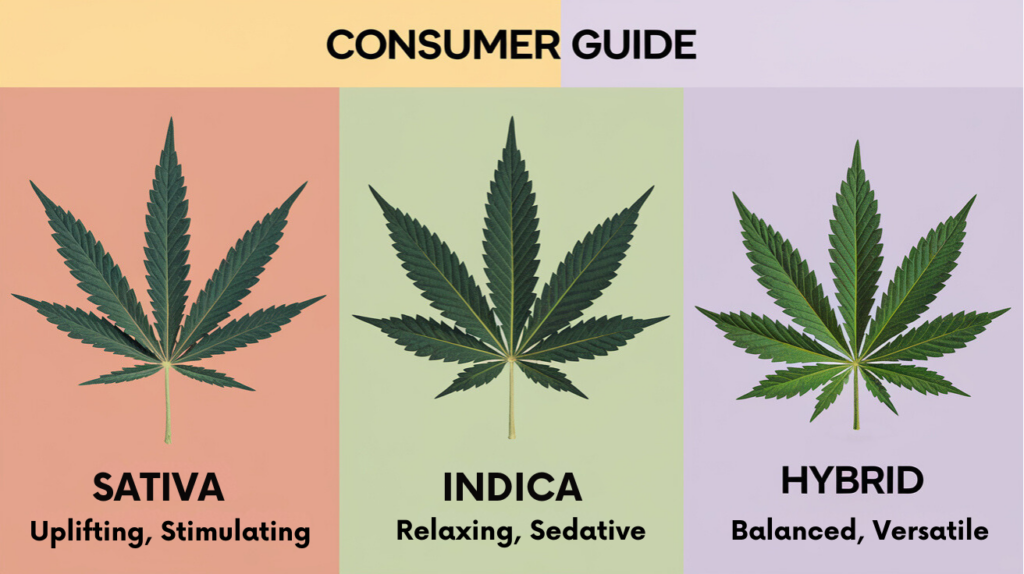
Selection Criteria
Selecting the appropriate cannabis strain requires careful consideration of various factors to ensure it aligns with your specific medical needs, recreational preferences, and cultivation conditions. This guide provides a comparative overview of Sativa, Indica, and Hybrid strains, highlighting their distinct characteristics to assist you in making an informed choice.
| Selection Criteria | Sativa | Indica | Hybrid |
| Medical Needs | Often chosen for mood enhancement and alleviating depression due to their uplifting effects. | Preferred for pain relief and managing insomnia because of their sedative properties. | Provide balanced effects, making them versatile for various medical conditions. |
| Recreational Preferences | Ideal for social activities and creative endeavors, offering an energetic high. | Suitable for relaxation and unwinding, delivering a calming experience. | Offer a mix of effects, catering to both social and relaxing settings. |
| Growing Considerations | Tend to grow taller with longer flowering periods; thrive in warmer climates. | Shorter plants with quicker flowering times; adaptable to cooler climates. | Exhibit growth traits from both parent strains, often combining favorable characteristics. |
This comparison can assist in selecting the appropriate cannabis strain based on specific needs and preferences.
Usage Tips
- Consumption Methods: Different methods affect the experience. Vaporizing is less harsh on the lungs compared to smoking, while edibles offer a longer-lasting, deeper effect.
- Timing Considerations: Use Sativas in the daytime for energy, and Indicas in the evening to relax.
- Safety Precautions: Always purchase from reputable sources and follow dosing recommendations.
Common Mistakes to Avoid
- Selection Errors: Picking a strain without considering THC content can lead to an overwhelming experience.
- Usage Mistakes: Consuming too much too quickly is a common mistake, especially with edibles.
- Storage Issues: Store cannabis in a cool, dark place to preserve potency and flavor.
Sativa, Indica, and Hybrid strains each bring something unique to the table. Understanding their differences can help you make better choices, whether you’re seeking medical relief or simply want to enjoy cannabis recreationally. As cannabis research continues to evolve, we can look forward to even more refined and effective strains tailored to specific needs.
For those looking to dive deeper, explore additional resources such as peer-reviewed studies and expert testimonials to continue expanding your cannabis knowledge. The journey into the world of cannabis is filled with possibilities, and we hope this guide has illuminated some of them for you.
Sources:
https://link.springer.com/chapter/10.1007/978-3-030-61663-2_1
https://jcannabisresearch.biomedcentral.com/articles/10.1186/s42238-019-0001-1
https://www.frontiersin.org/journals/plant-science/articles/10.3389/fpls.2021.675770/full
https://link.springer.com/chapter/10.1007/978-3-319-54564-6_4
https://rethink-rx.com/indica-vs-sativa-vs-hybrid
https://www.healthline.com/health/sativa-vs-indica
https://www.mpp.org/issues/legislation/key-marijuana-policy-reform/
https://en.wikipedia.org/wiki/List_of_2024_United_States_cannabis_reform_proposals
https://www.jacksonlewis.com/insights/navigating-cannabis-rescheduling-key-insights-healthcare
 What is Cannabis Sativa?
 The Influence of the Entourage Effect