Table of Contents
Is weed a gateway drug?
No. The latest research shows that marijuana does not cause chemical changes that push people toward harder drugs. ((NIJ, 2018; RAND, RB-6010; CDC). When harder drug use follows marijuana, it is usually due to outside factors like:
Social Environment: Who someone spends time with
Accessibility: How easy illegal drugs are to get where they buy cannabis
Age of Use: Starting any substance use at a young age
Alcohol and nicotine are more strongly linked to later drug problems because they chemically affect the brain in ways that increase addiction risk. (Kaiser Permanente, 2021).
What does the term “Gateway Drug” mean?
A “gateway drug” is usually a legal substance, like alcohol or cigarettes, that is believed to lead to harder drugs. The phrase emerged from political messaging during America’s “War on Drugs”, and gained popularity before scientists tested whether cannabis caused progression to harder drugs. Research has not demonstrated that causal link.
1951 (Political Origins): Harry Anslinger, Commissioner of the Federal Bureau of Narcotics, told Congress that heroin users “graduated” from marijuana. This unproven claim was used to advocate for harsher drug laws. (National Institutes of Health, 1989).
1975–1984 (The “Gateway” Definition): Researcher Denise Kandel identified a “gateway sequence” in drug use (Alcohol/Tobacco -> Marijuana -> Hard Drugs). Policymakers in the 1980s adopted the term “gateway drug” to justify cannabis prohibition. (Rath, 2015).
The Reality: By the time the term was defined scientifically, it had already been used for decades as a justification for prohibition and strict cannabis control.
What data science actually says about the gateway theory
For decades, the “gateway theory” suggested that using marijuana chemically alters a person’s brain, compelling them to seek out harder drugs like heroin or cocaine.
Modern science has disproved the theory that cannabis is a gateway drug.
Government and scientific bodies have reviewed the data and reached similar conclusions:
The National Institute of Justice: After reviewing decades of statistical research, they determined there is no causal link between cannabis and harder drugs.
The National Academy of Sciences: Found no substantial evidence that marijuana use causes the subsequent use of other illegal drugs.
While people who use hard drugs often did use marijuana first, just because one event happens before another doesn’t mean the first one caused the second. For example, most people ride a tricycle before a bicycle, but tricycles don’t cause motorcycle gangs.

So if marijuana doesn’t chemically “open the gate,” why do we see a pattern? Scientists now point to “Common Liabilities.” This means the same factors that make someone likely to try marijuana also make them likely to try other things.
1. The “Black Market” Environment
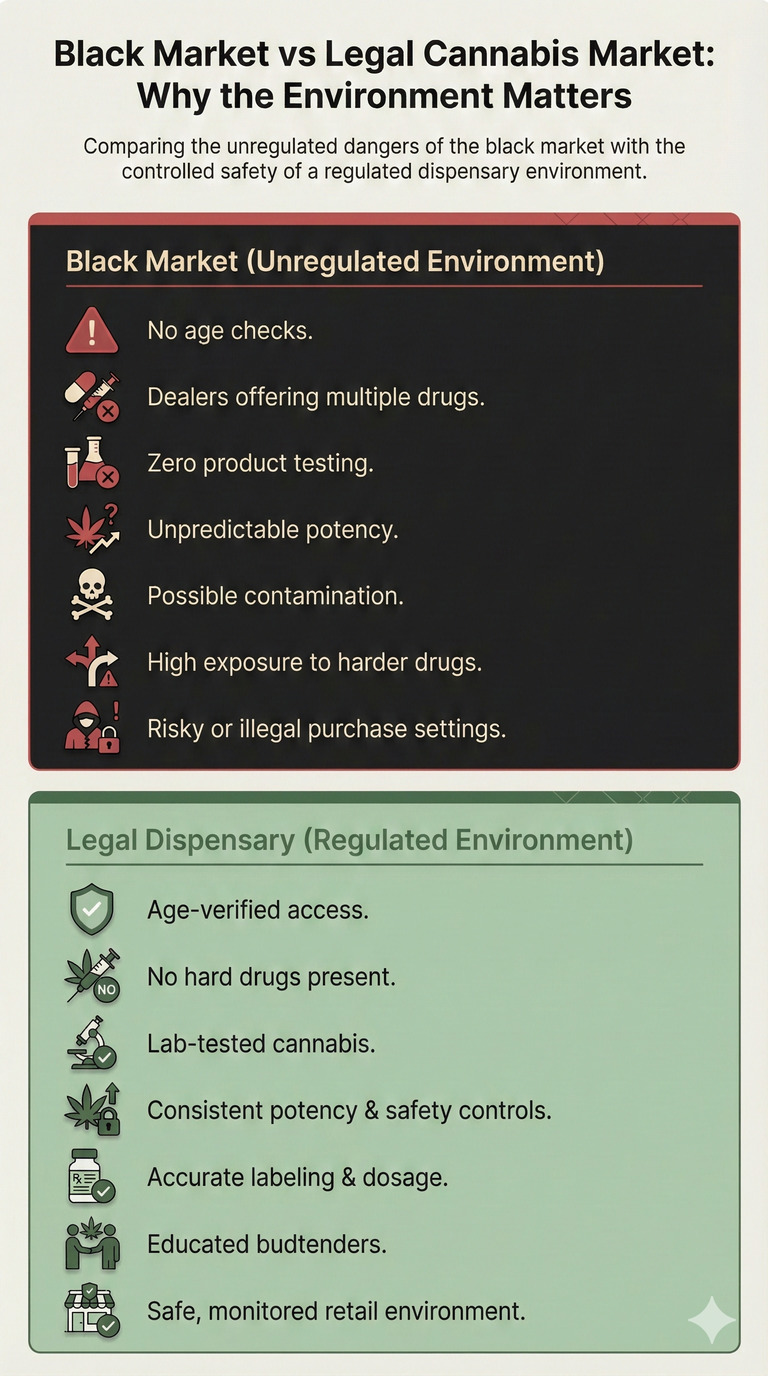
Laws that ban marijuana push people to the black market. Street dealers often offer harder drugs along with cannabis, which puts users in riskier situations than a regulated cannabis dispensary ever would. In this case, the law creates the liability or “gateway” rather than the plant itself.
2. Underlying Risk Factors (Trauma & Mental Health)
People who struggle with mental health issues, poverty, or high-stress environments are more likely to seek relief through substances.
Mental Health: Conditions like ADHD, depression, and anxiety often appear before drug use. People use substances to self-medicate these untreated issues.
Trauma: Adverse Childhood Experiences (abuse, neglect, or household dysfunction) wire the developing brain to seek relief.
They may start with accessible options like alcohol or marijuana and move to stronger ones not because of the weed, but because their underlying pain hasn’t changed or because they misunderstand the effects cannabis actually has on the mind and body.
3. Biology & Genetics (Dopamine Seeking)
The biggest predictors of addiction are often written in our DNA.
Genetics: DNA accounts for 40–60% of addiction risk. If addiction runs in your family, you are vulnerable to any substance you try.
Sensation Seeking: Some individuals are naturally wired to seek dopamine. They are likely to try many things (fast driving, extreme sports, various substances). Marijuana is simply the most available “first stop” on a journey they would likely have taken regardless.
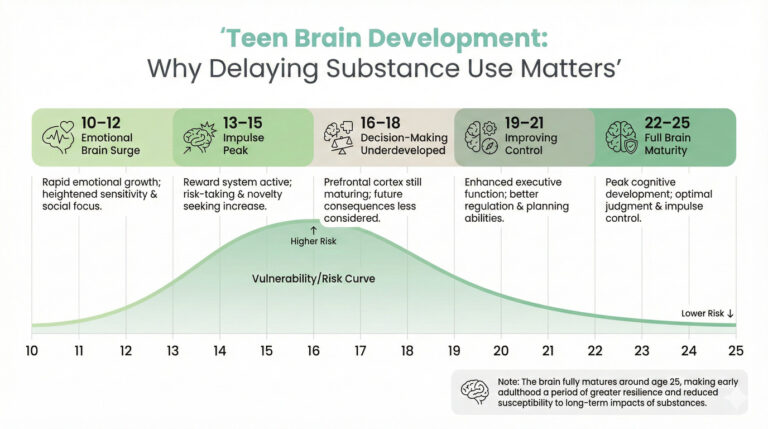
The “Teen Brain”: Adolescent brains are naturally wired for risk-taking and impulse. This biological stage, not the specific drug, is why most addiction begins in the teenage years.
Are alcohol and nicotine the real gateway drugs?
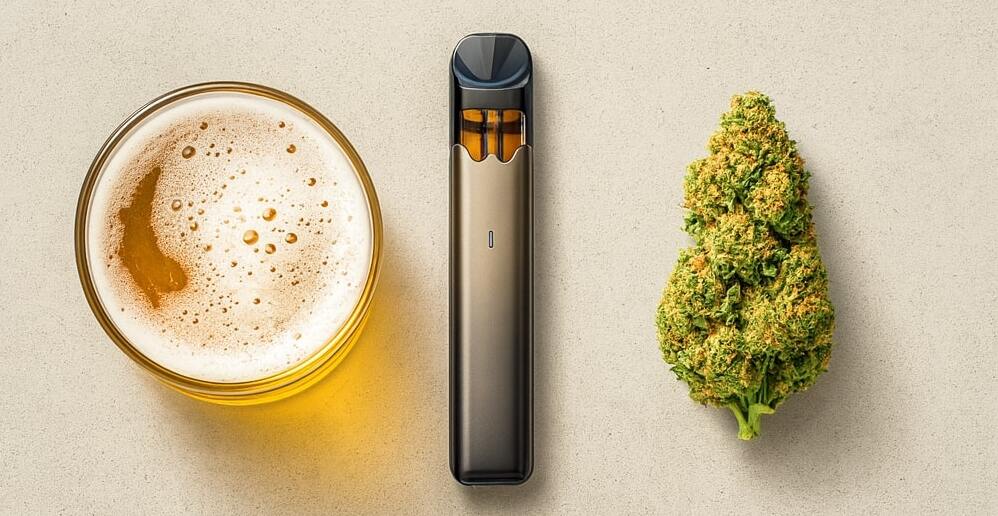
To some extent, yes. While marijuana gets the political attention, research suggests alcohol and nicotine are the true “first steps” in addiction, both statistically and biologically.
Legally accessible drugs almost always precede illegal ones. One major study found that 87.9% of cocaine users smoked cigarettes first. It is statistically rare to find a heroin or cocaine user who did not start with alcohol or tobacco.
Nicotine “Primes” the Brain: Unlike marijuana, there is evidence that nicotine causes physical changes that prepare the brain for harder drugs. This concept is called “Cross-Sensitization.” Nicotine exposure alters the brain’s reward system (specifically the FosB gene), essentially “pre-loading” it to release more dopamine if stimulants like cocaine are introduced later.
Alcohol Lowers Defenses: Alcohol acts as a behavioral gateway by impairing judgment. It lowers inhibitions, making a person significantly more likely to say “yes” to trying other substances in social settings.
Alcohol and nicotine are not just “gateways” because they come first in time. They are causal. They lower both the biological and behavioral barriers to future drug use. (Levine et al., 2011).
The invariant sequence: Why the myth persists
If the gateway theory is wrong, why do almost all heroin users start with marijuana?
The myth persists because of the “Invariant Sequence.” This simply means that people almost always try drugs in the exact same order:
First: Alcohol or Cigarettes
Second: Marijuana
Third: Harder Drugs (like Cocaine or Heroin)
Because this order is so consistent, it is easy to make a mistake. We see that marijuana comes before heroin, so we assume marijuana use causes heroin use. But that is a trap.
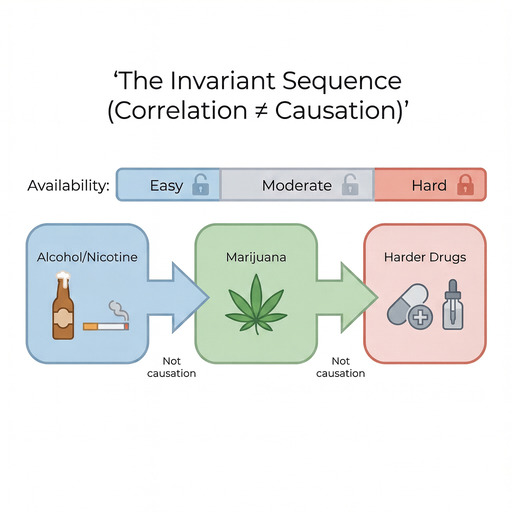
The sequence isn’t about chemistry, but availability. In the absence of a legal cannabis dispensary, marijuana is more difficult to buy than a pack of cigarettes, but easier to buy than heroin.
The “Legalization Test”: What happened when we opened the gate?
Real-world evidence provides the ultimate test for the Gateway Theory. If marijuana chemically compels people to use harder drugs, then legalizing it for millions of adults should have caused a massive spike in heroin and cocaine addiction.
That spike never happened.
No “Hard Drug” Crisis: Science says the “gateway” isn’t real. If it were, more legal weed would mean more addiction. Instead, data from JAMA Pediatrics and the CDC shows that hard drug use stayed flat in states that legalized cannabis.
The “Exit Ramp”: Legal weed might actually help. Instead of leading to harder drugs, it often replaces them. Research from the National Bureau of Economic Research suggests that states with legal marijuana often see fewer opioid overdoses because people choose cannabis over dangerous painkillers.
Safer Shops: Legalization fixes the environment. When you buy from a cannabis dispensary, there is no cocaine on the counter. By removing the street dealer, legalization removes the risk of being offered something harder.
What is new information about gateway drug meaning for parents?
If marijuana isn’t the root cause of hard drug use, how should we protect our kids? The answer isn’t to focus on just one drug, but to focus on the child’s health and environment.
1. The Goal is Delay (Protect the Brain)
It’s not just about weed. The goal is to keep all substances (alcohol, nicotine, and cannabis) away from young and developing brains.
Why it matters: Research proves that the longer a teen waits to try any substance, the safer they are. A brain that finishes growing (around age 25) is much more resistant to addiction than a teenage brain.
2. Fix the Cause, Not Just the Symptom
Real prevention isn’t just saying “Just Say No.” It is about fixing the problems that make kids want to use drugs in the first place.
Focus on the “Why”: If a teen is stressed, lonely, or dealing with trauma, they might use drugs to feel better. Building strong family connections and treating mental health issues prevents addiction better than any scare tactic.
3. Be Honest, Not Scary
Scare tactics usually backfire because kids can see through them.
What works: Have honest conversations. Acknowledge that while most people don’t get addicted, some people (due to genetics or mental health) are at very high risk. Make your home a safe place where they can talk about their struggles without fear of being punished.
Who is actually at risk of graduating from cannabis use to harder drugs?
Not everyone who smokes weed will move to harder drugs. Here is how to tell the difference.
⚠️ High Risk (The Danger Zone)
Starting Young: Kids who use regularly before age 16.
Using to Cope: Using drugs to hide from sadness, anxiety, or stress.
Family History: Kids with parents or grandparents who struggled with addiction.
The Crowd: Hanging out with friends who use heavy drugs.
✅ Lower Risk
Starting Later:Adults who start after age 21 tend to have much lower risk, especially when they approach cannabis with a responsible mindset and take time to learn the benefits and uses before diving in.
Using Socially: Occasional use with friends, rather than using alone to “numb” feelings.
Mental Health: People who are generally happy and do not have untreated depression or trauma.
Control: People who can easily stop using when they need to (like for work).
In short:
The idea of marijuana as a “gateway drug” is a relic of history, not a fact of science. While the sequence is real, it reflects opportunity rather than chemistry. People do not move to harder drugs because cannabis changes their brain. They move because of underlying risks like genetics, trauma, and their environment.
Science has moved on from this old theory. Experts now understand that addiction vulnerability exists before the first drug is ever taken.
The path forward is simple. Instead of relying on debunked scare tactics, we must focus on the root causes of addiction. By addressing mental health and delaying drug use in teens, we can protect vulnerable minds without needing to rely on myths.
FAQ
Gateway drug definition – What is a gateway drug?
A gateway drug is a substance (typically legal and accessible like alcohol or nicotine) theorized to lead users toward other drugs later. The gateway drug definition refers to the idea that using one substance “opens the gate” to harder drugs.
However, this gateway drug meaning oversimplifies how substance use actually works. While drug use often follows a sequence (alcohol/tobacco, then marijuana, then illicit drugs), epidemiological research shows this pattern reflects correlation, not causation. Studies using nationally representative samples demonstrate that environmental factors and common liability (shared risk factors like family history, mental health, trauma) better explain why some people progress to multiple substance use than any single drug’s chemical properties.
The most commonly labeled gateway drugs are alcohol, nicotine, and marijuana, but they’re simply the most accessible substances in a predictable sequence, not chemical catalysts for addiction.
What is the gateway drug theory, and is it still valid?
The gateway drug theory (or gateway hypothesis) proposes that marijuana use causes people to seek other drugs through chemical or psychological changes in the brain. Specifically, the marijuana gateway hypothesis suggested cannabis exposure alters brain chemistry (affecting opioid limbic neuronal populations), creating vulnerability to substance addiction.
Modern science has disproved this theory. Systematic review of decades of research, including administration model studies using adult rats and population data from nationally representative samples, found no evidence that cannabis increases interest in other substances through chemical pathways.
The gateway theory failed because it couldn’t explain several key facts:
Most marijuana users never progress to other drugs
Cannabis legalization hasn’t increased hard drug abuse
The association disappears when controlling for other risk factors (family history, mental health, early age of use)
Research on adolescent cannabis users and young adults shows progression to illicit drug use is better explained by common liability (environmental factors, family history, mental health) than by marijuana itself. The gateway hypothesis has been replaced by “common liability” theory, which recognizes that underlying vulnerabilities predict who develops multiple substance use disorders.
Is marijuana a gateway drug?
No, marijuana is not a gateway drug, and modern science no longer considers marijuana a gateway drug based on causation.
While some epidemiological research shows correlation between marijuana use and subsequent use of other drugs, this association is driven by common liability rather than cannabis causing interest in other substances. National Institute studies using nationally representative samples found no evidence that cannabis chemically compels people toward hard drugs.
The same risk factors that increase risk of using marijuana also increase risk of using other illegal drugs:
Family history of addiction (accounts for 40-60% of vulnerability)
Early age of first use
Environmental factors (trauma, poverty, peer groups)
Untreated mental health conditions
Access to black market dealers who offer multiple substances
Cannabis users who never progress to other illicit drugs vastly outnumber those who do. Real-world evidence supports this: data from states with medical cannabis laws and recreational cannabis programs shows cannabis legalization doesn’t increase hard drugs consumption. Research examining opioid overdose mortality actually found that areas with legal cannabis often see fewer opioid overdoses, suggesting cannabis users may choose marijuana instead of prescription opioids for pain management.
Why is marijuana commonly called a gateway drug if it isn’t one?
Marijuana is commonly called a gateway drug because of the “invariant sequence” in drug use patterns. Studies consistently show people try substances in this order: alcohol or nicotine first, then marijuana, then other drugs like cocaine or heroin. This pattern made it easy to assume marijuana use causes subsequent drug use.
However, the label was primarily political, not medical. The term emerged during America’s “War on Drugs” to justify prohibition and strict cannabis control. By the time researcher Denise Kandel scientifically identified the “gateway sequence” in 1975-1984, politicians had already been using the term for decades to advocate for harsher drug laws.
The gateway theory persists because people confuse sequence with causation. Just because marijuana often comes before other illegal drugs doesn’t mean it causes their use. The sequence actually reflects availability and opportunity, not chemistry. In the absence of legal cannabis dispensaries, marijuana is harder to buy than cigarettes but easier than heroin, placing it naturally in the middle of the progression.
Modern research on adolescent cannabis use and young adults shows the sequence reflects common liability (shared risk factors) rather than cannabis causing chemical changes that drive people toward other substances. Most cannabis users never use other illicit drugs, which wouldn’t be true if marijuana actually functioned as a gateway drug.
Does cannabis addiction exist, and how common is it?
Yes, cannabis addiction exists, though it’s formally called cannabis use disorders in medical terminology. Research shows approximately 9% of marijuana users develop use disorder, compared to 15% of alcohol users and 32% of tobacco users who develop nicotine dependence.
The risk of using cannabis heavily (daily or near-daily) increases vulnerability to cannabis use disorders significantly. People who start cannabis use at early age face three times higher risk than adults who begin after age 21.
Cannabis addiction typically involves:
Tolerance (needing more to get the same effect)
Withdrawal symptoms when stopping
Inability to cut back despite wanting to
Continued use despite negative consequences
However, cannabis use disorders are generally less severe than opioid use disorder or other substance use disorder patterns. The vast majority of people who use cannabis do so occasionally without developing addiction or progressing to other drugs.
Risk factors for developing cannabis use disorders mirror those for other substance use disorders: family history of addiction, early age of first use, using to cope with mental health issues rather than recreationally, and underlying trauma or adverse childhood experiences.
Who is actually at risk of progressing from marijuana to harder drugs?
While everyone faces some risk, research shows that progression depends on underlying vulnerabilities rather than the drug itself. As detailed in the “Common Liability” section above, the highest risk groups are adolescents who begin using before age 16, individuals with a family history of addiction (genetics account for 40-60% of risk), and those using cannabis to self-medicate untreated mental health conditions like ADHD or depression.
Conversely, adults who start after age 21, use socially rather than for coping, and have stable mental health are statistically at a much lower risk of progressing to other substances.
How should parents approach marijuana and drug prevention?
Because marijuana isn’t the sole cause of addiction, prevention must focus on the bigger picture. Experts recommend a three-pronged approach:
• Delay Use: The primary goal is to protect the developing brain. Keeping all substances (alcohol, nicotine, and cannabis) away from teens until age 21 drastically reduces lifetime addiction risk.
• Address Root Causes: Focus on why a teen might want to use. Strengthening family connections, treating underlying trauma, and addressing mental health issues are more effective than simple scare tactics.
• Honest Communication: Avoid exaggeration. Acknowledge that while most users don’t progress, specific risk factors (like family history) make it dangerous for them specifically. Create a safe environment for open dialogue.
APPENDIX
A. Common Liability Risk Factors Breakdown
The table below shows the underlying risks that actually predict substance problems, regardless of which drug someone tries first:
Risk Factor | Description | Why It Increases Risk | Notes / Data Points |
|---|---|---|---|
Trauma / ACEs | Early adverse experiences | Heightens stress response + coping behavior | ACE score strongly predicts substance experimentation |
Mental Health | ADHD, depression, anxiety | Self-medication patterns | Often precede first use |
Genetics | 40–60% heritability | Vulnerability to any substance | Not specific to cannabis |
Social Environment | Peer groups, availability | Exposure-based risk | Street dealers offer multiple drugs |
Age of First Use | Under 16 = highest risk | Brain is unfinished | Impulse control not developed |
Black Market Access | Illegal environments | Polydrug exposure | Legal shops eliminate this risk |
B. Gateway Theory vs Common Liability (Side-by-Side Table)
You already planned a visual comparison, but this can also be a table — and honestly, a table usually outperforms an image for SEO and skim readers.
Gateway Theory Claim | What Modern Science Shows Instead |
|---|---|
Marijuana chemically leads to harder drugs | No causal mechanism identified |
Sequence means causation | Sequence reflects availability |
Cannabis users “graduate” to heroin | Most cannabis users never use hard drugs |
Policy logic from 1950–1980 | Replaced by Common Liability framework |
Cannabis primes the brain | Nicotine does, cannabis does not |
C. High-Risk vs Low-Risk Profiles
Here’s a simple breakdown of what actually separates higher-risk from lower-risk cannabis use patterns:
High-Risk Indicators | Low-Risk Indicators |
|---|---|
Starting before age 16 | Starting after 21 |
Using to cope | Using socially |
Family history of addiction | No genetic predisposition |
Peer group involved in heavy drugs | Stable environment / supportive networks |
Daily heavy use | Occasional use with breaks |
D. Black Market vs Legal Cannabis Market: Why the Environment Matters
Written by: A21 Wellness Dispensary Team
Certified Cannabis Professionals
At A21 Wellness Dispensary, our team comprises passionate cannabis experts, including THC-University certified staff members. With a deep understanding of cannabis cultivation, extraction, and consumption, we are dedicated to providing our customers with the knowledge they need to make informed choices. Our commitment to innovation and sustainability ensures that we offer a curated selection of premium cannabis products, meticulously cultivated and crafted to perfection.
Disclaimer
This article is for informational purposes only and does not constitute medical or legal advice. Always consult a healthcare professional before using cannabis products, especially if you have a medical condition, are taking medications, or live in a state with specific cannabis regulations.